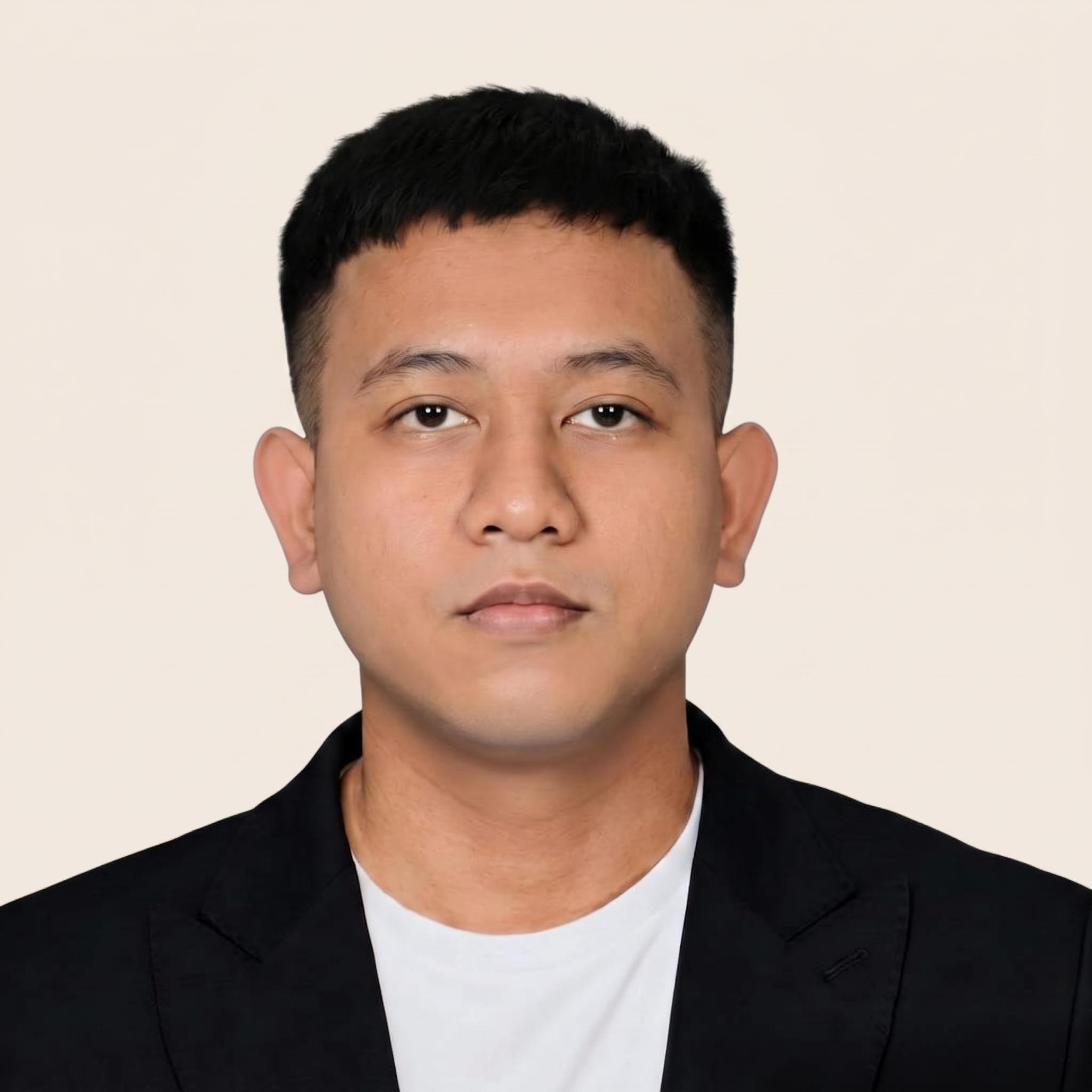
36 Hours to Save ASEAN: Marty Natalegawa's Shuttle Diplomacy
November 4, 2026
0:00
In July 2012, ASEAN did something it had never done in 45 years of existence: its foreign ministers left a meeting without a joint communique. For an organization built on consensus, it was a public admission that the consensus had broken. Within a week, one man had put a common position back on paper. His name is Marty Natalegawa.
The Man Behind the Mission
Raden Mohammad Marty Muliana Natalegawa was born in Bandung, West Java, on 22 March 1963. His academic path ran through three of the world's best-known institutions: a BSc (Hons) in International Relations at the London School of Economics (1984), an MPhil at Corpus Christi College, Cambridge (1985), and a PhD at the Australian National University (1993).He joined the Indonesian Foreign Ministry in 1986 and served at Indonesia's Permanent Mission to the UN in New York from 1994 to 1999, a period that included Indonesia's 1996-97 seat on the Security Council. He later served as Ambassador to the United Kingdom and Ireland, then returned to New York as Permanent Representative to the UN in September 2007. In November 2007 he held the rotating presidency of the UN Security Council. President Susilo Bambang Yudhoyono appointed him Foreign Minister in October 2009, a post he held until 2014.
Phnom Penh, 13 July 2012
The 45th ASEAN Ministerial Meeting took place in Phnom Penh, with Cambodia as chair. The Philippines and Vietnam wanted their recent clashes with China at sea reflected in the final communique. Cambodia, widely seen as close to Beijing, resisted. Foreign ministers had wrangled all week, and on Friday the talks ended with no joint statement.Natalegawa later said the whole thing came down to a small piece of text: one of four paragraphs on the South China Sea, inside a draft of 132 paragraphs, could not be agreed. He called the outcome "strange territory" for him, and publicly described the failure to speak with one voice as irresponsible. Cambodia's foreign minister, Hor Namhong, countered that a communique should not become hostage to a bilateral dispute between the Philippines and China.
The 36-Hour Sprint
Indonesia was no longer ASEAN chair, but Natalegawa volunteered as troubleshooter. Following instructions from President Yudhoyono, he left on 18 July for Manila, then went straight to Hanoi, where he met Foreign Minister Pham Binh Minh. He continued to Phnom Penh and Singapore, and reporting also mentions Kuala Lumpur and phone calls with the remaining ministers.His method was simple and exhausting: meet each minister face to face, listen to objections, carry a revised text to the next capital, repeat. His stated aim was a common ASEAN position, so there would be no vacuum in the bloc.
The Six Principles
On 20 July 2012, ASEAN released a six-point statement on the South China Sea. In substance, it called for:
full implementation of the 2002 Declaration on the Conduct of Parties (DOC) and its implementing guidelines
early conclusion of a regional Code of Conduct
respect for international law, including the 1982 UN Convention on the Law of the Sea
self-restraint and no use of force
peaceful resolution of disputes
The statement deliberately left out the single most contentious issue that had sunk the meeting. Even so, the Philippines welcomed it, and the effort was widely credited with restoring the bloc's morale. Cambodia, for its part, insisted the statement showed it was not at fault. China said it "noted" the position while defending its claims.
Fun Facts and Lessons
The whole crisis started over roughly 3 percent of a draft: four paragraphs out of 132 were about the South China Sea, and only one blocked agreement.
The sprint is remembered as a "36-hour" mission, yet it succeeded mostly because of relationships and trust built over decades, not because of speed alone.
Natalegawa later wrote a book about the bloc, titled Does ASEAN Matter? A View from Within (ISEAS, 2018).
Many commentators saw Phnom Penh as a sign that ASEAN's consensus model was fragile when great-power interests were involved. Others argued that a failed communique showed maturity, because real differences were no longer papered over.
The viral retelling of this story says shuttle diplomacy needs two things: command of international law of the sea, and a network large enough to open doors without waiting for official schedules. The record supports the point. The six principles leaned on UNCLOS and the DOC, and Natalegawa reached ministers directly because he had worked with them for years.
A Note on Accuracy
Short-video retellings often compress history. Two corrections worth knowing: Natalegawa's Cambridge degree was a Master of Philosophy in 1985, while his doctorate came from ANU in 1993. And the "five capitals" figure varies by source; the Jakarta Post lists Manila, Hanoi, Phnom Penh and Singapore, with Kuala Lumpur reached through other contacts or listed in other accounts.